
The invisible problem in infrastructure
The invisible problem in infrastructure: when the rope must not conduct electricity
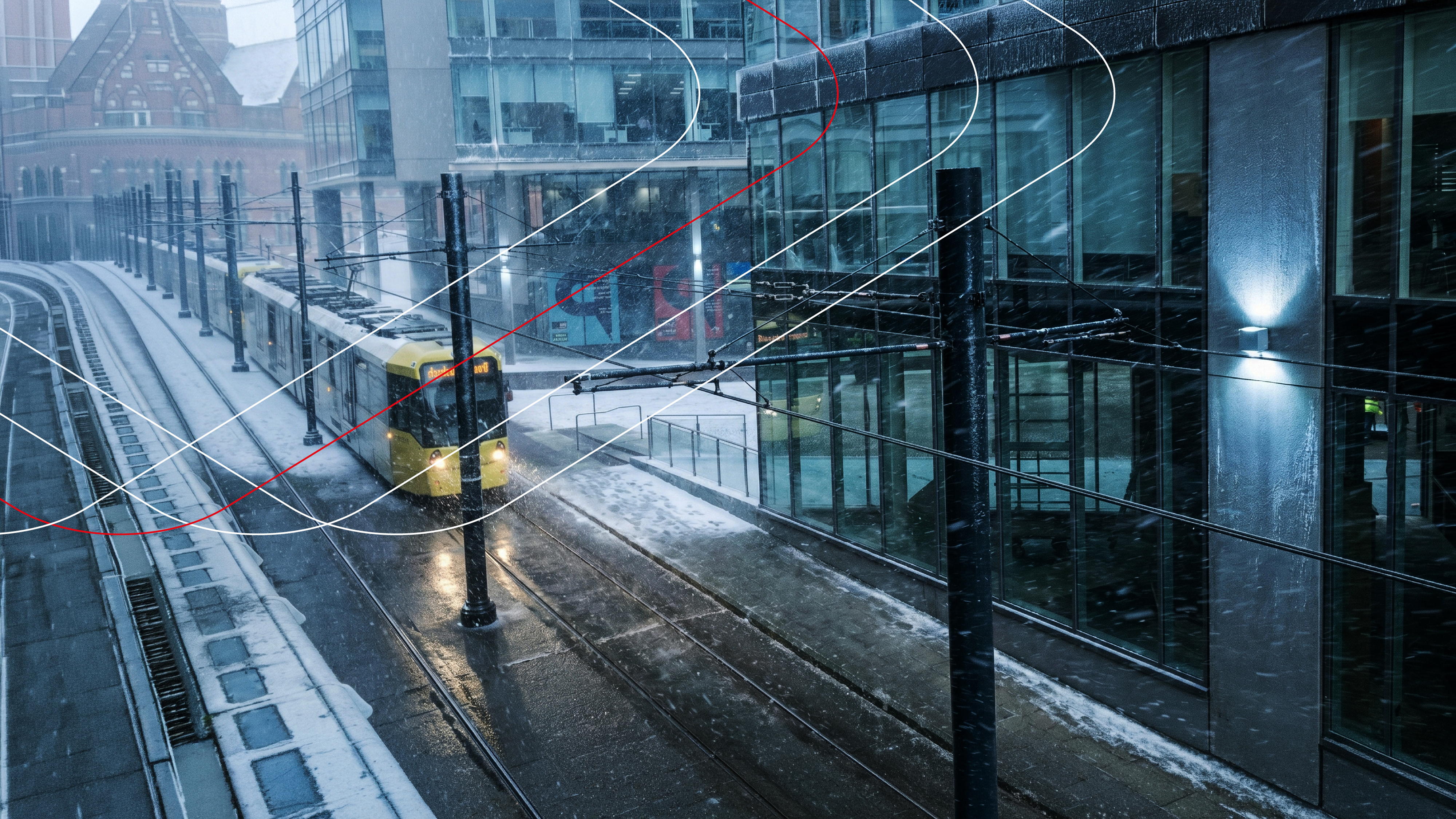
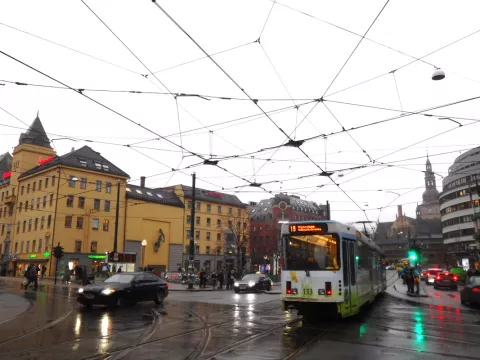
Most people who ride a tram through a European city never look up. The overhead wire is just there, strung between poles and gantries, keeping the vehicle moving. But above the contact wire, holding the whole geometry in place, is a network of support ropes under constant tension. And for a long time, every one of those ropes posed a quiet engineering problem.
They were made of steel. Steel is strong, durable, and available everywhere. It is also an excellent conductor of electricity. On a system running at 750 volts DC, that matters. The support ropes cannot touch the live contact wire without insulation between them. So engineers fitted ceramic insulators at intervals along each rope to break the electrical continuity. It worked. But ceramic insulators crack. They accumulate conductive contamination from urban pollution. They require inspection. Over thousands of metres of overhead line, across dozens of tram stops and city blocks, they multiply the maintenance programme considerably.
The same challenge appears on telecommunications masts. A guyed mast depends on steel wire rope for lateral stability. But the antenna it supports broadcasts radio frequency signals, and steel wire in close proximity distorts those signals. The fix is again the ceramic insulator, fitted at intervals along each guy. On a 120 m mast in an exposed location, those insulators must survive decades of wind load, thermal cycling, and whatever the weather delivers.
Both solutions share a common flaw: they address the symptom rather than the cause. The root problem is that steel conducts electricity. The insulator is a workaround.
What changes when the rope itself is non-conductive
High-strength synthetic fibres, like ParaFil™, formed into a parallel-lay rope and sheathed in a polymer jacket, offer a fundamentally different electrical profile. The rope does not conduct. It is also transparent to electromagnetic radiation, meaning it does not interfere with the signals an antenna is transmitting.
Remove the conductivity and the insulator becomes unnecessary. The rope runs from anchor to anchor in a single continuous length, without ceramic components, without inspection intervals, and without the contamination risk that comes with exposed ceramic in urban environments.
In an overhead line system, that simplification touches every stage of the project. Fewer components to design in, fewer fittings to install, and a maintenance programme that shrinks because there are no ceramics to inspect or replace. In a city environment where possession time on a live tram network is expensive and disruptive, that has direct commercial value.
For telecoms mast guying, the benefit is structural as well as electrical. Each ceramic insulator is a point where load transfer geometry changes slightly. Remove them and the guy behaves as a cleaner, more predictable structural element, easier to tension accurately and less prone to localised stress concentrations over time.
The Arctic dimension
There is one further problem that ceramic insulators cannot solve. In cold climates, ice accumulates on exposed ropes. On an antenna guy, it adds load and changes the tension profile. On a guyed mast in an Arctic environment, the weight of accumulation can become a structural problem in its own right.
Smooth polymer sheaths resist ice adhesion in ways that steel wire does not. The North American Air Defence System installed synthetic guys on Arctic antenna arrays specifically to prevent ice build-up from disturbing antenna signals. ParaFil™ synthetic ropes has proven itself in the most extreme environments. The same smooth surface that resists ice also sheds urban pollution, keeping overhead line support ropes cleaner for longer in city environments.
Why this matters now
Infrastructure managers face increasing pressure to reduce whole-life maintenance costs and extend asset service lives. The ceramic insulator on a steel OLE rope or antenna guy represents a recurring cost: inspection, replacement, and the occasional failure that forces an unplanned intervention. Removing that component from the system removes that cost permanently.
When the material itself solves the problem, rather than an add-on component managing the consequences, the system becomes more reliable and less expensive to own. That principle applies whether the application is a tram network in a European city or a mast in the Canadian Arctic.
ParaFil™ synthetic rope has been used in exactly these applications for over half a century, on tram networks across Europe, on telecommunications masts, and on defence antenna arrays in extreme conditions. The engineering is not complicated. The performance record is simply long.