
Engineering for extreme conditions

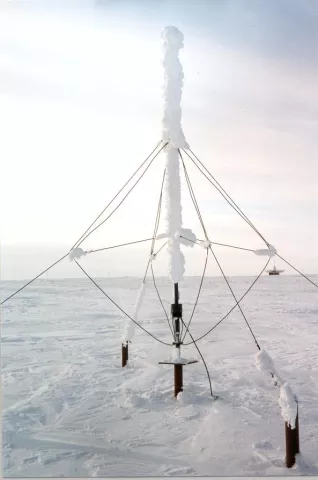
Engineering for extreme conditions: lessons from the field
In the world of critical infrastructure and energy systems, materials are pushed far beyond comfortable operating ranges. They face pressure, abrasion, temperature cycles, hydrodynamic forces and decades of continuous use. The real test is not how a material performs in controlled conditions, but how it behaves after years inside an environment that never compromises.
Across global projects, advanced polymer composites are proving that long-term durability is not just possible but achievable at a level that traditional materials often cannot match. Through our work with operators, engineers and inspection teams, we have seen first-hand how composite technologies such as ParaFil™ and ParaLoop™ help systems remain reliable over time in some of the world’s most demanding locations.
Why engineers rely on composites for extreme conditions
Steel has long been the default choice for structural tension systems. Yet when placed in seawater, exposed to continuous motion or subjected to cycles of heat and cold, steel begins to fatigue, corrode and lose predictability. Composite solutions offer a fundamentally different performance profile. They are lighter, more chemically stable, electrically neutral and inherently resistant to corrosion.
Prime Synthetic Solutions develops composite systems designed to replace heavy and corrosion‑prone tension elements in situations where reliability directly influences operational safety and service continuity. Our products are built around high strength polymer fibers that maintain stability in environments where metal systems degrade.
Field insights: how advanced composites behave in real environments
Subsea energy systems require stability that lasts decades
Subsea systems are uniquely unforgiving. Once installed, many components are expected to remain in place for 20 to 30 years. ParaFil™ ropes, built from parallel high strength fibers inside a protective sheath, have been used in multiple subsea applications designed for a 25‑year service life.
What is remarkable is what happens after those 25 years.
In several long-term deployments, operators have reported that when ParaFil™ systems were retrieved for inspection, the loss of strength was minimal and in some cases there was no loss at all. The fibers remained stable, the protective sheath retained integrity and the mechanical performance stayed within expected ranges for continued use. This long-term durability has validated the value of polymer composites in deepwater use cases where maintenance is either impractical or impossible.
This kind of field evidence highlights a crucial point. The value of performance is not measured at installation but at the end of life. ParaFil™ has demonstrated that when built correctly, polymer fiber systems can deliver multi‑decade reliability under pressure, motion and saltwater exposure.
Temperature extremes call for materials that can adapt without degrading
ParaLoop™ synthetic strapping is used in environments that span tropical heat, freezing winters, underground thermal cycles and subsea pressure conditions. Its stable mechanical behavior across temperatures is one of the reasons it is used in projects where maintaining tension is mission‑critical.
In field inspections, ParaLoop™ systems have shown consistent tension retention even when exposed to rapid temperature transitions that would typically cause metal straps to expand, contract or deform. This predictable thermal behavior reduces maintenance interventions and improves operational continuity for remote infrastructure operators.
Infrastructure lasts longer when material degradation is no longer a constant threat
Polymer composites do not rust, swell, delaminate under moisture, or develop microfractures in the same way metals do. This makes them especially suitable for long-term infrastructure elements such as reinforcement systems, tower restraints or offshore connectors.
Because these materials do not react with their environment, the structural load profile remains consistent. This long-term stability helps operators avoid unplanned outages and reduces lifecycle environmental impact by eliminating unnecessary replacements.
Designing for a future that requires resilience
The next generation of infrastructure will demand significantly more from materials. Offshore renewable systems, deep geothermal operations and high-voltage subsea networks all require components that can operate for decades without maintenance windows. Lightweight composite systems reduce transport emissions, simplify installation and remove one of the largest long-term failure modes in tension elements: corrosion.
Prime Synthetic Solutions focuses on engineering composite solutions that are not only strong but also resilient in real-world conditions. This approach combines materials science expertise with lessons gathered directly from decades of field use.
Collaboration ensures that each solution fits its environment
Extreme environments differ from project to project. The most effective designs are created through close collaboration between engineers, operators and our technical specialists. By adjusting fiber orientation, sheath materials or termination configurations, we can tune the mechanical behavior of each system to match its exact operational demands.
This approach ensures that the products placed in the field are prepared for the specific stresses they will encounter, and it gives operators confidence that performance will not diminish over time.